





When most people think about breathing issues, they think about the lungs. But breathing is actually a full-body process—one that relies heavily on spinal mobility, posture, muscle balance, and nervous system function.
If you’ve ever felt short of breath, tight through your chest, or unable to take a deep, satisfying inhale—even without a respiratory condition—your spine and nervous system may be playing a bigger role than you realize.
Breathing Is a Nervous System Function
Breathing is controlled by the autonomic nervous system, which regulates involuntary actions like heart rate, digestion, and respiratory rhythm. This system runs through and is protected by the spine.
When spinal joints—especially in the neck, upper back, and rib cage—are restricted or misaligned, communication between the brain and the muscles involved in breathing can become less efficient.
This doesn’t mean something is “wrong” with your lungs—but it may mean your body isn’t able to expand, contract, and regulate breathing as effectively as it should.
How Spinal Restrictions Affect Breathing
Modern lifestyles create patterns that directly impact breathing quality:
- Prolonged sitting and screen use
- Forward head posture
- Rounded shoulders
- Shallow, chest-based breathing
- Chronic stress and tension
These patterns reduce mobility in the thoracic spine and rib cage, which limits how much the lungs can expand. Over time, breathing becomes shallower, less efficient, and more effortful.
Many people don’t notice this until they feel:
- Tightness in the chest
- Neck or upper back tension
- Shortness of breath during activity
- Increased anxiety or stress
- Fatigue despite “normal” breathing
The Chiropractic–Breathing Connection
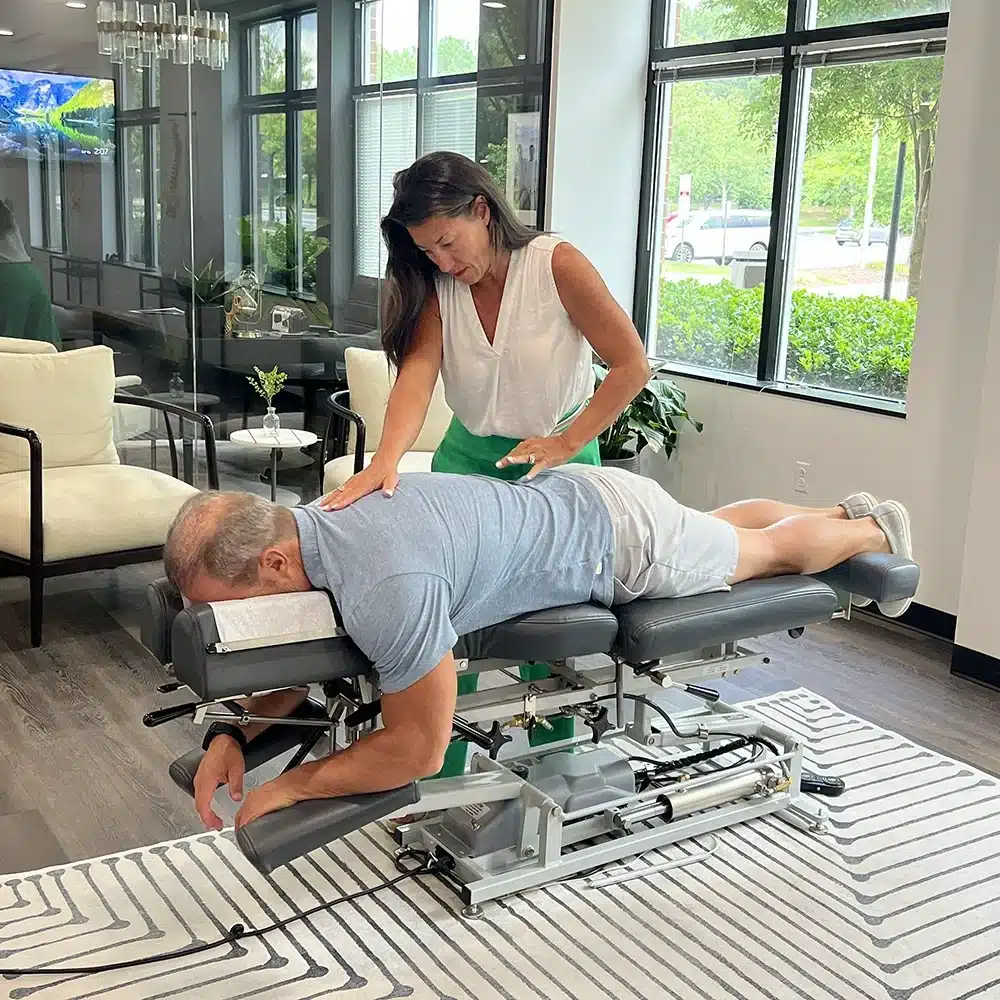
Chiropractic adjustments focus on restoring motion, alignment, and nervous system balance, all of which play a role in breathing.
🫁 Improved Rib Cage & Thoracic Mobility
The ribs attach directly to the thoracic spine. When spinal joints move better, the rib cage can expand more fully—allowing deeper, more efficient breaths.
🧠 Better Nervous System Communication
Adjustments help reduce interference along the spine, supporting clearer signaling between the brain and respiratory muscles like the diaphragm and intercostals.
🧍 Improved Posture
Chiropractic care helps correct forward head posture and rounded shoulders, creating more space in the chest for the lungs to expand.
😌 Reduced Stress Response
When the nervous system shifts out of “fight or flight,” breathing naturally becomes slower, deeper, and more rhythmic—supporting calm and focus.
Why Better Breathing Matters for Overall Health
Efficient breathing isn’t just about oxygen—it affects nearly every system in the body.
Better breathing can support:
- Increased energy and stamina
- Improved focus and mental clarity
- Reduced stress and anxiety
- Better sleep quality
- Improved immune function
- Enhanced exercise performance
When breathing improves, people often notice changes far beyond their lungs.
Simple Ways to Support Breathing Between Visits
In addition to chiropractic care, these habits can help support better breathing:
Posture Check-Ins
Sit tall, keep screens at eye level, and allow the shoulders to relax down and back.
Thoracic Mobility
Gentle upper-back stretches and rotations help restore rib cage movement.
Diaphragmatic Breathing
Practice slow nasal breathing that expands the belly and rib cage—not just the chest.
Consistent Movement
Walking, stretching, and light mobility work help prevent stiffness that restricts breathing.
Chiropractic Care Looks Beyond Symptoms
Chiropractic care isn’t about treating breathing conditions—it’s about supporting the structures and systems that allow your body to function optimally.
If you’ve noticed shallow breathing, chest tightness, increased stress, or fatigue, it may be worth looking beyond the lungs and considering how spinal health and nervous system balance play a role.
At HFC Wellness, we focus on helping your body move, breathe, and function better—so you can feel your best from the inside out.