




The Ultimate Guide to HillDT Spinal Decompression Therapy: How It Works
Back pain, neck pain, sciatica, and disc-related symptoms can make everyday life harder than it should be. For many people, the pain is not just a temporary ache. It may come from a herniated disc, bulging disc, compressed nerve, degenerative disc disease, or spinal stenosis.
At Health First Chiropractic & Wellness in Glen Allen, VA, HillDT spinal decompression therapy offers a non-invasive back treatment option designed to reduce pressure on the spine without surgery, injections, or long recovery time.
HillDT spinal decompression therapy works by using a computerized, load-sensing table to apply precise, gentle distracting forces to the spine. Unlike traditional traction, it targets specific spinal segments and bypasses body resistance, creating negative intradiscal pressure that may help draw herniated disc material away from irritated nerves and support disc rehydration through nutrient-rich fluid movement.

What Is HillDT Spinal Decompression Therapy?
HillDT spinal decompression therapy is a form of computerized spinal decompression designed to gently stretch targeted areas of the spine. The goal is to reduce pressure inside the spinal discs and relieve stress on irritated nerves.
Unlike basic traction, which often applies a more general pulling force, the HillDT table uses advanced sensor-driven technology to monitor patient resistance and treatment force during the session. HillDT’s official product information explains that its load sensor technology constantly measures and monitors treatment force and patient resistance, helping the table deliver smoother, low-force decompression.
This makes HillDT therapy especially relevant for patients looking for conservative spine care for issues involving the lumbar spine, cervical spine, and disc-related nerve irritation.
The Technology Behind the HillDT Table
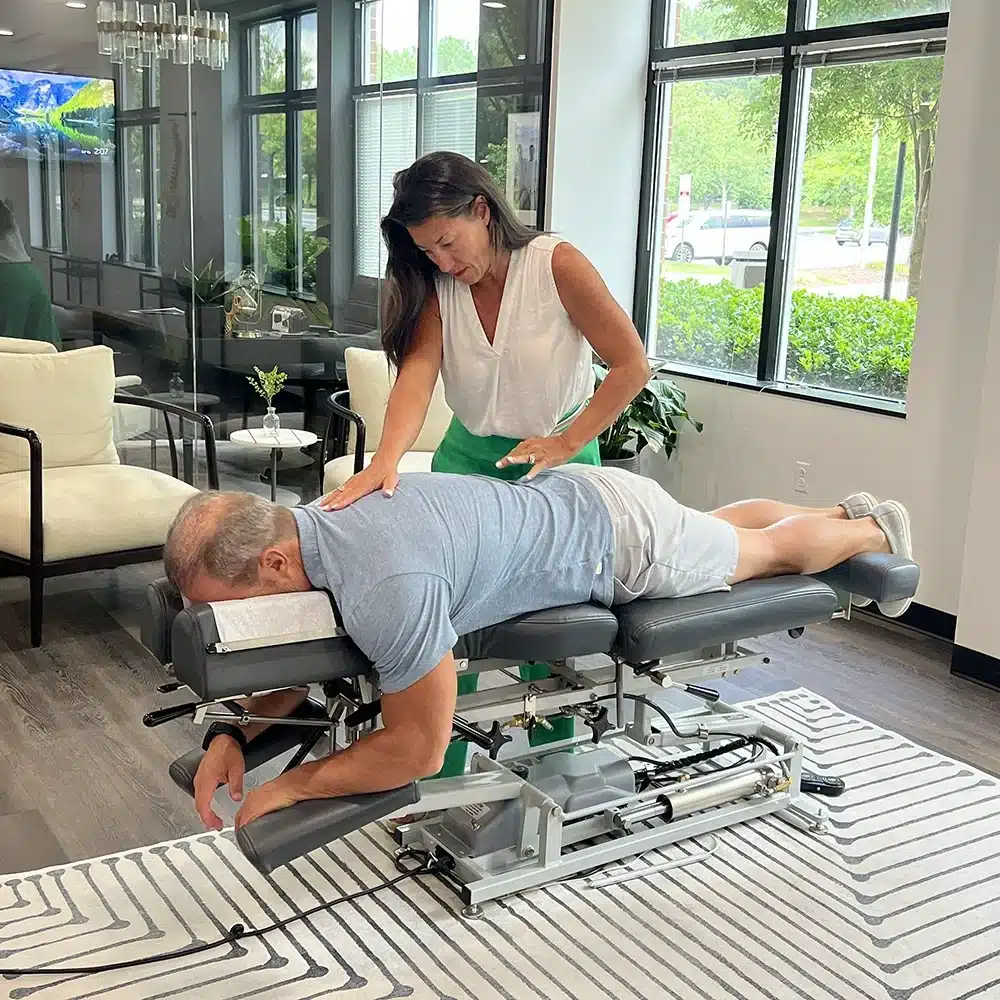
The HillDT table is a computerized spinal decompression table built to deliver controlled and repeatable decompression sessions. The system allows the provider to adjust the treatment program, decompression force, angle, table position, and treatment time based on the patient’s condition and comfort level.
The table can be used for both:
Lumbar spine decompression, which focuses on the lower back.
Cervical spine decompression, which focuses on the neck.
For lumbar decompression, the HillDT system uses positioning support, pelvic straps, treatment protocols, and angle adjustments to help target the intended spinal area. For cervical decompression, the table includes a specialized device that supports the head and allows angle adjustments to help target specific neck segments.

How HillDT Spinal Decompression Works: The Science
The spine is made up of vertebrae, discs, joints, nerves, muscles, and ligaments. The discs sit between the bones of the spine and act like cushions. When a disc becomes compressed, damaged, dehydrated, or displaced, it can irritate nearby nerves and cause pain that travels into the arms, hands, legs, or feet.
HillDT therapy is designed to address this pressure by creating a controlled decompression effect.
Bypassing the Body’s Muscle Guarding Reflex
One major difference between computerized spinal decompression and traditional traction is how the body responds.
When the spine is pulled too quickly or too aggressively, the muscles may tighten in response. This is known as muscle guarding. When guarding happens, the body resists the treatment force, which can make decompression less effective or less comfortable.
HillDT sensor-driven technology is designed to detect patient resistance during treatment and adjust the force accordingly. HillDT describes this as a way to reduce muscle guarding and provide smoother decompression compared with cable-based systems.
Creating Negative Intradiscal Pressure
One of the main goals of non-surgical spinal decompression is to reduce pressure inside the disc. This is often called negative intradiscal pressure.
When pressure inside the disc is reduced, it may help create a better environment for the disc and surrounding tissues. Research on non-surgical spinal decompression has discussed its intended effect of reducing intradiscal pressure, although the quality and strength of evidence can vary depending on the study and treatment protocol.
For patients with disc-related pain, this may help reduce irritation around compressed or pinched nerves.
Promoting Disc Rehydration and Nutrient Flow
Spinal discs do not receive blood flow in the same way many other tissues do. They rely heavily on fluid exchange and movement to receive nutrients.By gently unloading the disc, spinal decompression may help encourage disc rehydration and nutrient movement into the affected area. This does not mean the disc is instantly “fixed,” but it may support a healthier healing environment when combined with a proper care plan, movement guidance, and clinical monitoring.

Conditions Treated by HillDT Therapy
HillDT spinal decompression therapy may be recommended for certain spine-related conditions after a proper evaluation. Cleveland Clinic lists nonsurgical spinal decompression as a therapy used for conditions such as bulging discs, degenerative discs, herniated discs, pinched nerves, sciatica, and spinal stenosis.
Herniated and Bulging Discs
A herniated disc happens when the inner disc material pushes outward and irritates nearby nerves. A bulging disc occurs when the disc extends beyond its normal boundary.
Both can cause localized pain or radiating symptoms, especially when the disc affects a nerve root.
HillDT therapy may help by reducing pressure around the affected disc and supporting herniated disc retraction in appropriate candidates. This is why non-surgical disc treatment is often considered by patients who want to avoid surgery when possible.
Sciatica and Pinching Nerves
Sciatica often happens when a nerve in the lower back becomes irritated or compressed. Symptoms may include:
Pain traveling from the lower back into the buttock or leg
Numbness or tingling
Burning or sharp nerve pain
Weakness or discomfort while sitting, standing, or walking
For patients with radiculopathy and sciatica relief needs, lumbar spine decompression may help reduce pressure on the affected nerve pathway.
Degenerative Disc Disease and Spinal Stenosis
Degenerative disc disease happens when spinal discs lose height, hydration, and flexibility over time. This can contribute to stiffness, recurring pain, and reduced mobility.
Spinal stenosis involves narrowing in the spinal canal or nerve openings. In some cases, foraminal narrowing may contribute to nerve pressure and radiating pain.
HillDT therapy may be part of a conservative spine care plan for spinal stenosis management, depending on the patient’s condition, imaging findings, and overall health history.
What Happens During a HillDT Session?
A HillDT spinal decompression session is typically calm, controlled, and personalized. The goal is not to force the spine into position, but to apply precise decompression in a way that the body can tolerate.
Step 1: Personalized Assessment and Setup
Before treatment begins, the provider reviews your symptoms, history, pain pattern, and possible contraindications for spinal decompression.
This may include questions about:
Where your pain is located
Whether pain travels into your arms or legs
How long symptoms have been present
What movements make symptoms better or worse
Any prior surgeries, fractures, implants, pregnancy, or serious medical conditions
The provider then positions you on the HillDT table based on whether your treatment is focused on the lumbar spine or cervical spine.
Step 2: Precise, Computerized Distraction
During treatment, the HillDT table applies controlled decompression forces to the targeted area. The system can adjust treatment settings such as force, angle, treatment program, and time. HillDT’s software also provides real-time data during treatment, including decompression force and treatment timing.
Most patients describe the session as gentle stretching or pressure relief rather than pain. If discomfort occurs, the provider can adjust the treatment.
HillDT also includes patient safety features, including a safety switch that can stop the treatment if needed.
Step 3: Post-Treatment Protocol
After decompression, your provider may recommend a short post-treatment protocol. This may include gentle movement, supportive exercises, stabilization work, posture guidance, hydration, or additional chiropractic care depending on your case.
The goal is to help your spine respond well after decompression and support long-term improvement, not just temporary relief.
HillDT Therapy vs. Traditional Back Surgery: Why Choose Non-Surgical?
Back surgery may be necessary in certain serious cases, especially when there is severe nerve compression, progressive weakness, loss of bowel or bladder control, or structural instability. However, not every disc problem requires surgery.
HillDT therapy is a non-invasive back treatment option that may be considered before more aggressive interventions, depending on the patient’s condition.
Compared with surgery, non-surgical spinal decompression generally involves:
No incision
No general anesthesia
No hospital stay
No surgical recovery period
A conservative approach focused on reducing spinal pressure
That said, HillDT therapy is not a guaranteed cure and is not appropriate for everyone. A proper assessment is important before starting care.
Frequently Asked Questions
Is HillDT spinal decompression therapy painful?
HillDT spinal decompression therapy is designed to be gentle and controlled. Many patients feel a stretching sensation, pressure relief, or relaxation during the session.
It should not feel sharp, intense, or unbearable. If pain increases during treatment, the provider can adjust the settings or stop the session.
How many sessions of spinal decompression do I need?
The number of sessions depends on your condition, symptom severity, exam findings, and how your body responds to treatment.
Some patients may need a short series of visits, while others with chronic disc issues, sciatica, or degenerative disc disease may need a longer care plan. Your provider will recommend a plan after evaluating your spine and symptoms.
Who is not a good candidate for the HillDT table?
Spinal decompression is not appropriate for everyone. Common contraindications may include pregnancy, spinal fracture, severe osteoporosis or osteopenia, spinal infection, spinal tumor, certain spinal implants, prior fusion, or unstable spinal conditions. Spine-health lists several groups who may not be good candidates for nonsurgical spinal decompression, including pregnant patients, patients with broken vertebrae, spinal fusion, implants, osteoporosis, spinal tumors, and spinal infections.
This is why a proper consultation is important before beginning care.
What is the success rate of HillDT spinal decompression?
There is no single universal success rate that applies to every patient. Results depend on the diagnosis, severity of the condition, treatment consistency, age, lifestyle factors, and whether the patient is a good candidate.
Some studies and case series report improvements in pain and function with non-surgical spinal decompression, but results vary and more research is still helpful for comparing protocols and long-term outcomes.
The best next step is to schedule an evaluation to determine whether HillDT therapy is appropriate for your specific condition.
Conclusion: Take the First Step Toward a Pain-Free Life
Living with back pain, neck pain, sciatica, or disc-related symptoms can affect your sleep, work, movement, and quality of life. HillDT spinal decompression therapy offers a non-surgical, computerized approach designed to reduce spinal pressure, support disc health, and help relieve nerve irritation in appropriate candidates.
At Health First Chiropractic & Wellness, we help patients in Glen Allen, VA, and nearby communities explore conservative spine care options that fit their condition and goals.
If you are dealing with a herniated disc, bulging disc, sciatica, pinched nerve, degenerative disc disease, or chronic back pain, HillDT therapy may be worth discussing with our team.
Book your consultation today and take the first step toward better movement, less pain, and a healthier spine.