




Pain can come from many places. Sometimes it starts as tight muscles after stress, exercise, or long hours at a desk. Other times, it may come from joint restriction, spinal stiffness, poor posture, or irritation around the nerves.
That is why many people compare massage therapy vs chiropractic care when looking for musculoskeletal relief. Both can help people feel better, move more comfortably, and manage pain without surgery. However, they work in different ways.
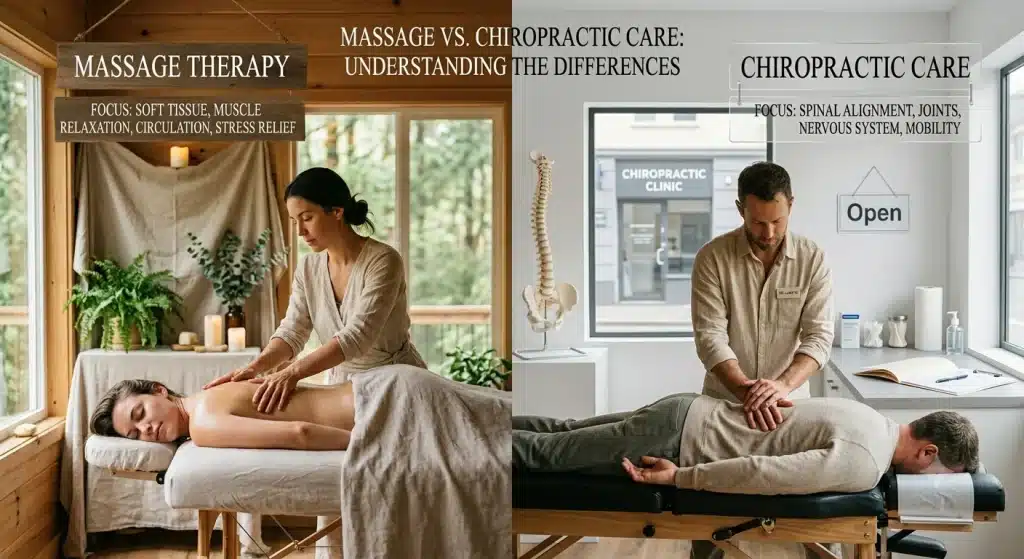
Massage therapy focuses mainly on the soft tissue, including muscles, fascia, and connective tissue. Chiropractic care focuses more on the spine, joints, nervous system, and overall alignment of the musculoskeletal system.
Massage or Chiropractic?
When choosing between soft tissue manipulation and structural alignment, the decision usually comes down to the source of your discomfort.
Massage therapy focuses primarily on muscles and soft tissues. It may be ideal for muscle tension, stress relief, soreness, and tight areas that feel like knots.
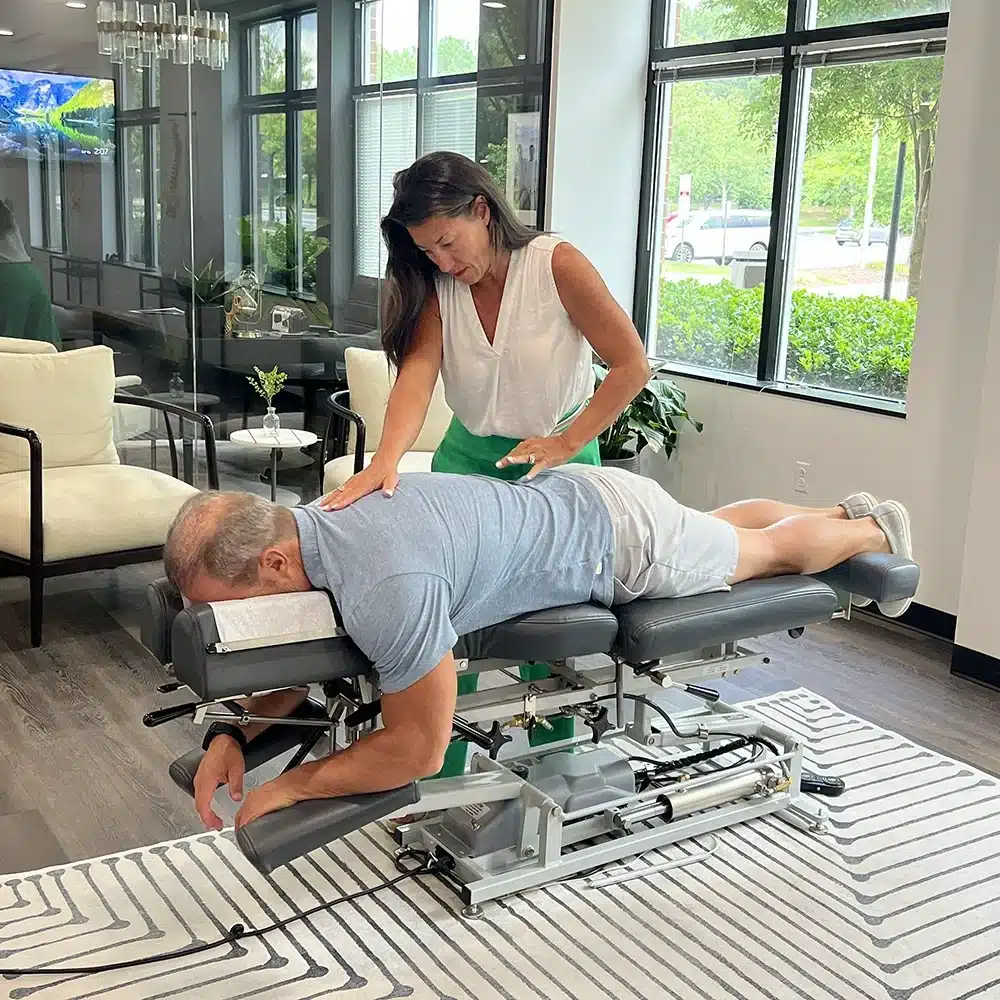
Chiropractic care targets the musculoskeletal and nervous systems. Chiropractors use spinal adjustments and other hands-on techniques to address joint restrictions, alignment issues, and nerve-related discomfort.
If your pain feels muscular, massage therapy may be the better starting point. If your pain seems connected to a joint, spine, posture, or nerve issue, chiropractic care may be the better choice.

When Massage Is Better
Massage therapy is often the better choice when your discomfort feels muscular, tense, or stress-related. It works by applying pressure and movement to soft tissue, helping muscles relax and improving local circulation.
Massage may also help reduce stress, support relaxation, and ease tension held in the neck, shoulders, back, and hips. Some techniques, such as deep tissue massage or myofascial release, focus on tight fascia and deeper muscle layers. These approaches may be helpful when muscles feel stiff, overworked, or restricted.
Massage therapy may be a good fit for:
- Chronic muscle tightness or stiffness.
- Stress, anxiety, and tension headaches.
- Post-workout muscle soreness and recovery.
- Flexibility support and general relaxation.
- Minor soft tissue injuries or muscle spasms.
- Dull, achy discomfort in the “meat” of the muscle.
Massage is especially helpful when pain feels like a tight knot, soreness, or general muscle fatigue rather than sharp joint pain or radiating nerve symptoms.

When Chiropractic Is Better
Chiropractic care is often the better choice when pain feels structural, joint-related, or connected to the spine and nervous system. Chiropractors evaluate how the spine and joints are moving and may use a spinal adjustment to improve joint mobility and reduce restriction.
A chiropractic adjustment may help restore movement in stiff joints, improve spinal alignment, and reduce pressure or irritation around surrounding tissues. Chiropractors may also provide posture guidance, stretching recommendations, and lifestyle advice to support long-term musculoskeletal relief.
Chiropractic care may be a good fit for:
- Severe or chronic lower back pain.
- Neck pain or stiffness.
- Sciatica or radiating nerve discomfort.
- Joint stiffness or restricted range of motion.
- Poor posture or spinal alignment concerns.
- Whiplash or alignment issues after an accident.
- Chronic headaches or migraines that may originate from cervical spine issues.
If your pain feels sharp when moving a joint, travels down the arm or leg, or keeps returning despite rest or massage, it may be time to consult a chiropractor.
Cost Comparison
| Feature | Massage Therapy | Chiropractic Care |
| Average Out-of-Pocket Cost | $60–$120+ per session, depending on duration and setting | $50–$150 per session, depending on treatment and modality |
| Insurance Coverage | Rarely covered unless medically necessary or prescribed | Frequently covered by major health insurance plans, though copays may apply |
| Session Frequency | Often monthly or bi-weekly for maintenance | May begin with multiple visits per week, then taper to maintenance care |
| Typical Goal | Soft tissue relaxation, stress reduction, muscle recovery | Joint mobility, spinal alignment, nerve-related pain relief |
Recovery Timeline
Massage Recovery
After a massage, many people feel immediate relaxation, reduced muscle tension, and improved ease of movement. However, if the session involves deep tissue work, trigger point therapy, or myofascial release, mild soreness may occur for 24–48 hours.
Hydration, light movement, and rest may help the body recover after a more intensive massage session. For chronic muscle tension, several sessions may be needed before the effects last longer.
Chiropractic Recovery
After chiropractic care, some patients notice immediate relief in joint pressure, spinal stiffness, or range of motion after a spinal adjustment. Others may feel mild soreness, fatigue, or temporary tenderness as the body adapts to improved movement.
Lasting relief often requires cumulative visits, especially if the issue has been present for weeks, months, or years. Your chiropractor may recommend a care plan based on your condition, symptoms, posture, and lifestyle.
Which is Right for You?
Use this simple guide:
Choose massage therapy if:
- Your pain feels like a tight knot or dull muscle ache.
- You feel sore after workouts or physical activity.
- Your discomfort is linked to stress or tension.
- You want relaxation, soft tissue relief, or improved circulation.
- You do not have sharp, radiating, or joint-specific pain.
Choose chiropractic care if:
- Your pain feels sharp when moving a joint.
- You have back pain, neck pain, or sciatica.
- You feel restricted range of motion.
- You have posture-related discomfort.
- You experience radiating nerve pain, numbness, or recurring spinal stiffness.
- Your pain feels related to alignment, joint mobility, or chronic misalignment.
Massage therapy and chiropractic care can also complement each other. For example, getting a massage before a chiropractic adjustment may help relax tight soft tissues, making it easier for the body to respond to the adjustment. Chiropractic care can then address joint restrictions and spinal alignment, while massage supports muscle relaxation and recovery.
Frequently Asked Questions
Can you get a massage and a chiropractic adjustment on the same day?
Yes. Many people safely receive both on the same day. In some cases, getting a massage first may help relax the soft tissues, making it easier for the chiropractor to perform a spinal adjustment. However, the best order depends on your condition and your provider’s recommendation.
Is a chiropractor a doctor?
Yes. Chiropractors are Doctors of Chiropractic, also known as DCs. They complete graduate-level chiropractic training and must be licensed to practice. They are healthcare professionals trained to evaluate and treat certain musculoskeletal conditions. Massage therapists are licensed bodywork practitioners who focus primarily on soft tissue manipulation.
Which is safer for neck pain?
Both massage therapy and chiropractic care are generally safe when performed by licensed professionals and when used for the right condition. For simple muscle strain or tension, massage therapy may be ideal. For structural issues, restricted joint mobility, radiating nerve pain, or possible cervical spine involvement, a chiropractor may be better equipped to evaluate the root cause.
If your neck pain follows a major accident or comes with weakness, numbness, dizziness, severe headache, or loss of coordination, seek medical care immediately.
Final Thoughts
When comparing massage therapy vs chiropractic care, the best choice depends on where your pain is coming from.
Massage therapy is usually better for soft tissue pain, muscle tension, stress reduction, soreness, and relaxation. Chiropractic care is usually better for spinal alignment, joint mobility, nerve-related discomfort, lower back pain, neck pain, sciatica, and posture-related problems.
If your pain feels muscular, start with massage. If your pain feels structural, sharp, recurring, or nerve-related, chiropractic care may be the better next step.