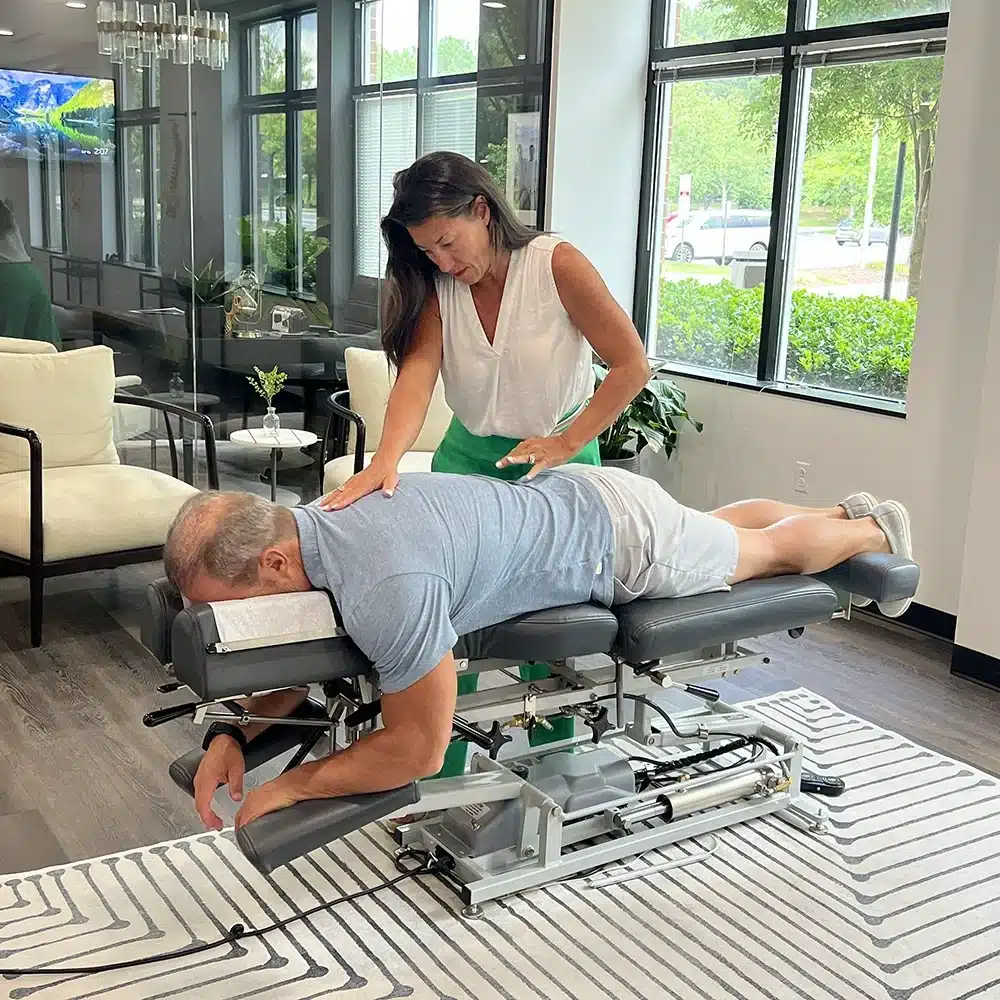






Sciatica vs. Herniated Discs: How Spinal Decompression Resolves Nerve Pain
Sciatica and herniated discs are closely connected, but they are not the same thing. Many patients use the terms interchangeably because both can cause lower back pain, shooting leg pain, numbness, tingling, and nerve irritation. However, understanding the difference can help you choose the right treatment approach.
At Health First Chiropractic & Wellness in Glen Allen, VA, we use non-surgical spinal decompression therapy to help address the source of disc-related nerve pain, especially when symptoms are connected to a herniated disc, bulging disc, or compressed sciatic nerve root.
The main difference between sciatica and a herniated disc is that a herniated disc is a structural problem, where the cushioning disc ruptures, bulges, or protrudes, while sciatica is a symptom pattern involving nerve pain that travels along the sciatic nerve path. A herniated disc in the lower back is often a direct cause of sciatica. Non-surgical spinal decompression may help address both by gently separating the vertebrae, reducing pressure on the nerve root, and supporting a healthier healing environment for the affected disc.
Understanding Nerve Pain: Is It Sciatica or a Herniated Disc?
When someone says, “I have sciatica,” they are usually describing pain that travels from the lower back into the buttock, hip, leg, or foot. But sciatica itself is not always the root problem. It is often the result of another condition irritating or compressing the sciatic nerve.
A herniated disc, on the other hand, is a physical problem inside the spine. When the disc material moves out of place, it can press against nearby nerves and trigger radiating symptoms.
That is why proper evaluation matters. Treating only the pain may give temporary relief, but treating the underlying pressure may lead to better long-term results.
What Is a Herniated Disc? The Structural Issue
A herniated disc happens when the soft inner material of a spinal disc pushes through or beyond the outer disc layer. This may also be described as a slipped disc, ruptured disc, disc protrusion, or disc herniation.
Spinal discs act like cushions between the bones of the spine. When a disc becomes damaged, compressed, or weakened, the inner material can push outward and irritate nearby nerves.
A herniated disc can happen in different areas of the spine, but lower back herniations are especially common. An L4-L5 herniation or L5-S1 disc problem can irritate nerve roots that contribute to leg pain, numbness, tingling, and sciatic nerve radiculopathy.
Common signs of a herniated disc may include:
- Localized lower back pain
- Pain that worsens with sitting, bending, or lifting
- Pain traveling into the buttock or leg
- Numbness or tingling in the leg or foot
- Muscle weakness
- Symptoms that follow a specific nerve pathway
A herniated disc can exist without major pain, but when it presses on a nerve root, symptoms can become intense.
What Is Sciatica? The Symptomatic Issue
Sciatica is nerve pain that follows the path of the sciatic nerve. The sciatic nerve starts in the lower back and travels through the buttocks, hips, legs, and feet.
Sciatica is not a standalone diagnosis in many cases. It is usually a symptom caused by irritation, inflammation, or compression of the nerve roots that form the sciatic nerve.
Common causes of sciatica include:
- Herniated discs
- Bulging discs
- Degenerative disc disease
- Spinal stenosis
- Foraminal narrowing
- Bone spurs
- Piriformis-related irritation
- Nerve root compression
Sciatica usually feels different from ordinary muscle soreness. It often creates sharp, burning, electric, or shooting pain that travels down one side of the body.
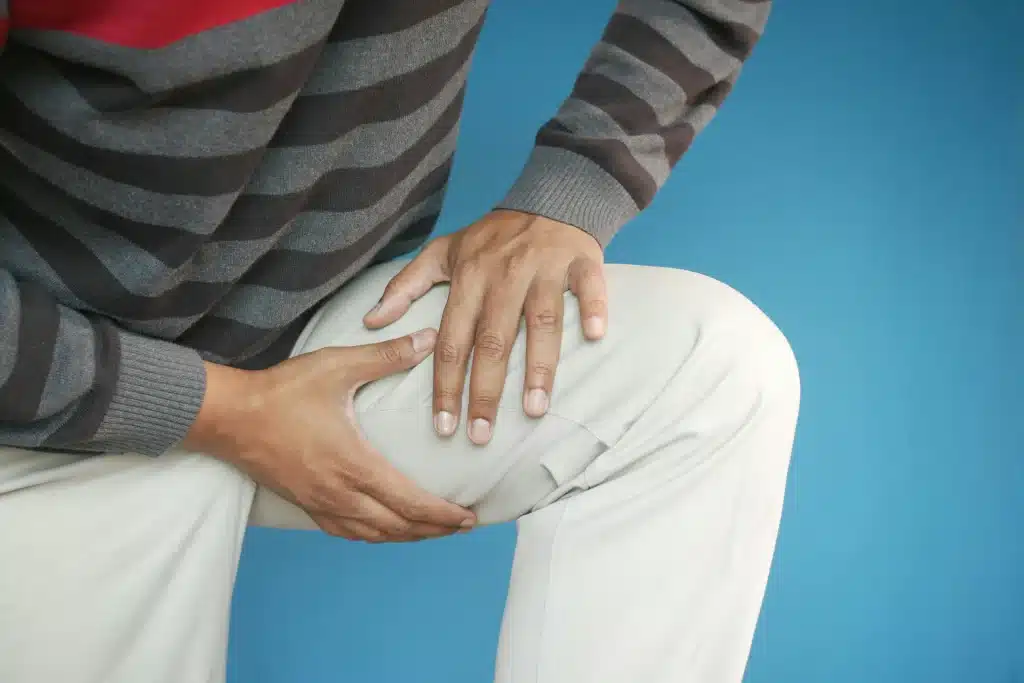
The Connection: How a Herniated Disc Triggers Sciatica
The lower spine contains nerve roots that branch out and travel into the legs. When a herniated disc pushes into the space where these nerves exit the spine, it can create nerve root compression.
This compression may irritate the nerve and cause pain to travel along the sciatic nerve pathway.
For example, a herniated disc in the lumbar spine may press on a nerve root around L4-L5 or L5-S1. When that nerve root becomes irritated, the pain may not stay in the lower back. It may radiate into the buttock, thigh, calf, foot, or toes.
This is why someone may have a structural problem in the lower back but feel most of the pain in the leg.
The pain pattern can sometimes follow a dermatome map. A dermatome map shows which areas of the skin are connected to specific spinal nerve roots. This can help providers understand whether symptoms may be coming from a particular nerve level.
In simple terms:
A herniated disc is the source problem.
Sciatica is the nerve pain pattern that may result from that problem.
Common Symptoms: How to Tell Which One You’re Suffering From
The symptoms of sciatica and herniated discs can overlap. However, the pattern of pain can give important clues.
A herniated disc may cause more localized pain when the disc itself is irritated. This pain may stay near the lower back or neck. But when the disc presses on a nerve root, the pain often becomes radiating.
Sciatica usually creates pain that travels away from the spine and into the leg.
Here is a simple comparison:
| Symptom Pattern | More Common with Herniated Disc | More Common with Sciatica |
| Lower back pain | Yes | Sometimes |
| Pain down one leg | Often, if nerve is compressed | Yes |
| Shooting leg pain | Possible | Very common |
| Numbness or tingling | Possible | Common |
| Burning or electric pain | Possible | Common |
| Pain worse with sitting | Common | Common |
| Muscle weakness | Possible | Possible |
| Localized vs radiating pain | Can be either | Usually radiating |
| Symptoms follow a nerve path | If nerve root is involved | Yes |
You may be dealing with both if you have lower back pain along with pain traveling into the buttock, leg, calf, or foot.This is why it is not enough to say, “I have sciatica.” The more important question is: What is causing the sciatic nerve pain?
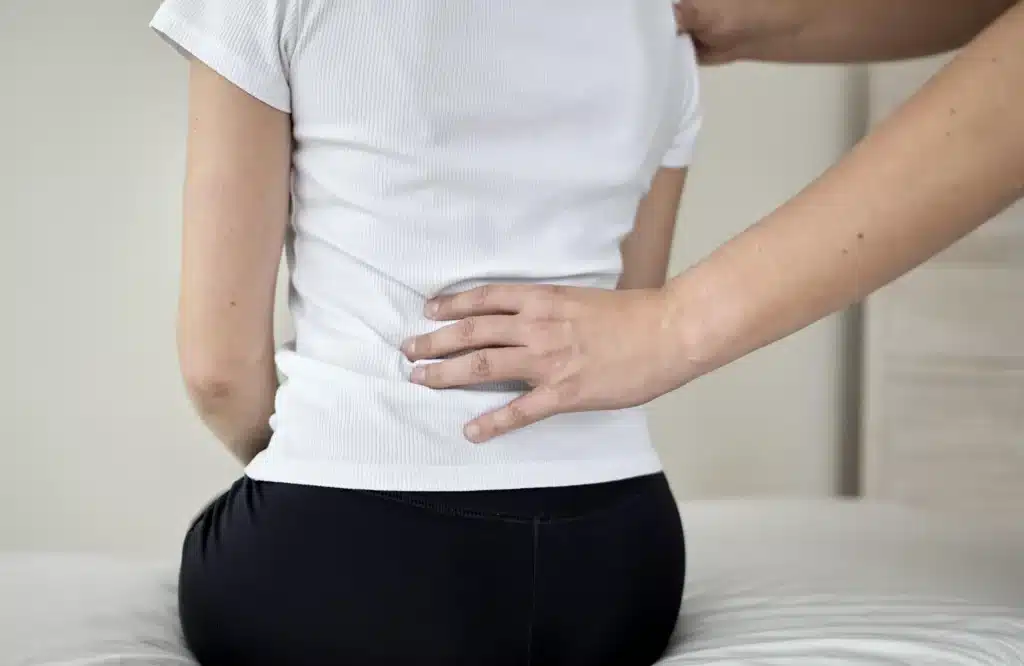
Why Typical Painkillers Fail to Fix the Root Cause
Painkillers may reduce inflammation or dull the pain temporarily, but they do not always fix the mechanical problem creating the nerve pressure.
If a herniated disc is compressing a nerve root, medication may help you feel better for a short time, but the pressure may still be there.
This is why symptoms often return when the medication wears off.
Painkillers may help manage discomfort, but they do not directly:
- Reduce disc pressure
- Create more space around the nerve root
- Improve spinal mechanics
- Address disc protrusion
- Support disc rehydration
- Correct the source of sciatic nerve radiculopathy
For many patients, lasting relief requires addressing the underlying cause of nerve irritation, not just masking the pain signal.
That is where non-surgical spinal decompression may help.
How HillDT Spinal Decompression Directly Addresses Both Conditions
HillDT spinal decompression therapy is designed to gently reduce pressure in targeted areas of the spine. Instead of using a general pulling force, the HillDT table uses computerized controls and load-sensing technology to apply a more precise decompression force.
The goal is to create a controlled unloading effect in the affected spinal area. For patients with disc-related sciatica, this may help reduce pressure on the irritated nerve root and support a better healing environment around the disc.
Relieving Pressure on the Sciatic Nerve Root
When sciatica is caused by a herniated disc or disc protrusion, the main issue is often nerve root compression.
HillDT spinal decompression gently separates the vertebrae in a controlled way. This may help reduce pressure around the affected disc and nerve root.
As pressure decreases, patients may experience improvement in symptoms such as:
- Shooting leg pain
- Burning nerve pain
- Numbness
- Tingling
- Low back tightness
- Pain that travels into the buttock, thigh, calf, or foot
The purpose is not simply to stretch the back. The purpose is to create a targeted decompression effect where the nerve irritation is happening.
Retracting the Herniated Material Back into the Disc
Non-surgical spinal decompression is designed to create negative intradiscal pressure inside the spinal disc.
When this pressure changes, it may help encourage herniated or bulging disc material to move away from the irritated nerve area. This is sometimes described as herniated disc retraction.
The decompression process may also help support fluid movement and nutrient flow into the disc. Since spinal discs rely heavily on fluid exchange, this may support disc rehydration and a healthier healing environment.
This does not mean every herniated disc can be “fixed” permanently with decompression. Results depend on the severity of the disc issue, the patient’s health, the treatment plan, and whether the person is a good candidate.
However, for appropriate patients, HillDT spinal decompression may be a valuable non-surgical option before considering more aggressive care.
Frequently Asked Questions
Can you have sciatica without a herniated disc?
Yes. A herniated disc is one common cause of sciatica, but it is not the only cause.
Sciatica may also be caused by spinal stenosis, bone spurs, degenerative disc disease, foraminal narrowing, piriformis-related irritation, pregnancy-related pressure, or other conditions that irritate the sciatic nerve pathway.
That is why a proper evaluation is important. The goal is to identify the cause of the nerve pain, not just label the symptom as sciatica.
How does spinal decompression stop shooting nerve pain?
Spinal decompression may help reduce shooting nerve pain by decreasing pressure on the irritated nerve root.
When a disc protrusion or herniated disc compresses a nerve, the pain can travel down the leg. By gently creating space between the vertebrae and reducing disc pressure, decompression may help relieve irritation around the nerve.
As the nerve becomes less compressed, symptoms like shooting pain, numbness, tingling, or burning may begin to improve.
Can a herniated disc heal permanently with decompression therapy?
Some herniated discs can improve over time with conservative care, including spinal decompression, chiropractic care, exercise guidance, posture correction, and lifestyle changes.
However, “permanent” healing depends on many factors, including the size of the herniation, how long symptoms have been present, daily habits, activity level, and whether the patient continues to protect and strengthen the spine after treatment.
Spinal decompression may help create a better healing environment, but long-term results often require a complete care plan.
Conclusion: Stop Masking the Pain—Heal the Source
Sciatica and herniated discs are closely related, but they are not the same. A herniated disc is a structural spine issue. Sciatica is the radiating nerve pain that may happen when a nerve root becomes compressed or irritated.
Pain medication may help temporarily, but it does not always address the pressure causing the pain.
HillDT spinal decompression therapy offers a non-surgical approach designed to reduce disc pressure, relieve nerve root compression, and support the body’s natural healing process in appropriate patients.
At Health First Chiropractic & Wellness, we help patients in Glen Allen, VA, and nearby communities find conservative treatment options for lower back pain, sciatica, herniated discs, bulging discs, and nerve-related symptoms.
If you are tired of masking the pain and want to understand what is causing your symptoms, schedule a consultation with our team today.
Take the first step toward lasting relief and find out if HillDT spinal decompression therapy is right for you.