





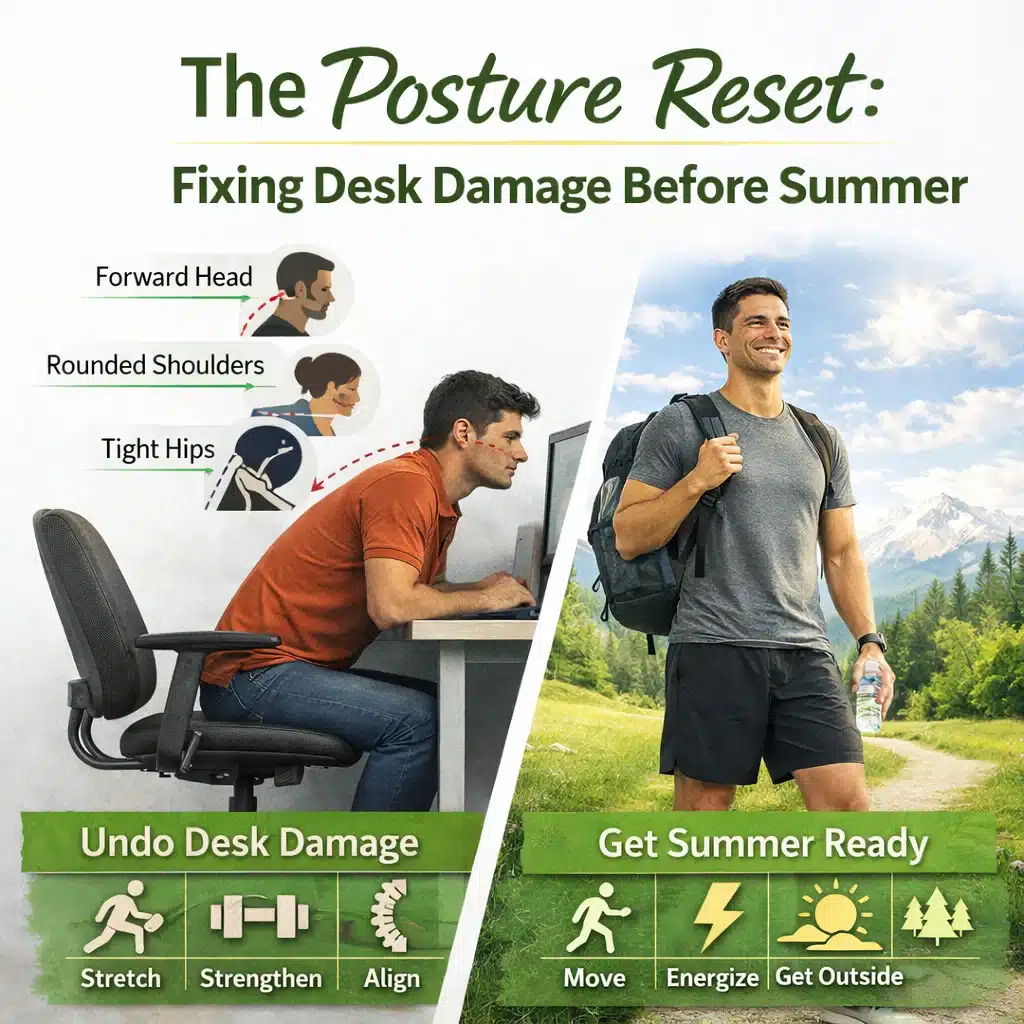
Long hours at a desk don’t just affect how you sit—they affect how your entire body moves, feels, and functions. As summer approaches and activity levels increase, unresolved posture issues can lead to pain, stiffness, and injuries that limit your ability to enjoy the season.
Spring is the perfect time for a posture reset—before summer travel, workouts, and outdoor activities place added demand on your body.
How Desk Work Damages Posture
Prolonged sitting and screen time often lead to:
- Forward head posture
- Rounded shoulders
- Tight chest and hip flexors
- Weak core and upper back muscles
- Reduced spinal mobility
Over time, these patterns don’t just affect comfort—they alter movement mechanics and increase stress on joints and nerves.
Why Posture Matters More Than You Think
Posture is not just about appearance. Poor posture impacts:
- Spinal alignment and joint health
- Nervous system communication
- Breathing mechanics
- Muscle balance and coordination
- Energy levels and fatigue
Left uncorrected, posture issues can contribute to headaches, neck pain, low back pain, shoulder problems, and reduced athletic performance.
The Nervous System–Posture Connection
Your nervous system controls muscle tone and movement patterns. When posture is compromised, nerve signaling can become disrupted—causing muscles to overwork or underperform.
Correcting posture helps:
- Improve nerve communication
- Reduce compensatory muscle tension
- Improve balance and coordination
- Enhance breathing and oxygenation
This is why posture correction is a key component of chiropractic care.
How Chiropractic Care Supports Posture Correction
Chiropractic care addresses posture at its foundation—spinal alignment and nervous system function.
Regular chiropractic care can:
- Restore proper spinal alignment
- Improve joint mobility
- Reduce muscle tension caused by compensation
- Support retraining of proper movement patterns
When combined with posture awareness and movement strategies, chiropractic care helps create lasting correction.
Simple Posture Reset Strategies
1. Adjust Your Workstation
- Screen at eye level
- Feet flat on the floor
- Hips slightly higher than knees
- Elbows relaxed at your sides
2. Break Up Sitting Time
Stand, stretch, or walk every 30–60 minutes to reset posture patterns.
3. Strengthen Postural Muscles
Focus on:
- Upper back
- Core
- Glutes
4. Open What’s Tight
Stretch chest, hip flexors, and neck muscles daily.
5. Move More Outside the Desk
Walking, mobility work, yoga, and strength training help undo desk-related stiffness.
Why Spring Is the Ideal Time for a Posture Reset
Spring offers:
- More daylight for movement
- Improved consistency in routines
- Fewer summer travel interruptions
- A natural transition into higher activity
Correcting posture now helps prevent pain before summer demands increase.
Stand Taller, Move Better This Summer
Posture doesn’t fix itself—and pain doesn’t need to be your normal. A proactive posture reset can help you feel stronger, move better, and enjoy summer without limitations.
At Health First Chiropractic & Wellness, we help patients correct posture, improve movement, and support long-term spinal health through personalized chiropractic care.
Fix the damage now—so summer feels better from the start.