




Chronic back pain can affect the way you work, sleep, walk, and enjoy daily life. For people dealing with herniated discs, sciatica, spinal stenosis, or degenerative disc disease, two treatment paths often come up: non-surgical spinal decompression and spine surgery.
Both options aim to reduce pressure on irritated spinal discs or nerves, but they are very different in terms of invasiveness, cost, risk, and recovery time. Understanding spinal decompression vs surgery can help you have a more informed conversation with your provider and choose the safest next step for your condition.
Spinal Decompression vs. Surgery
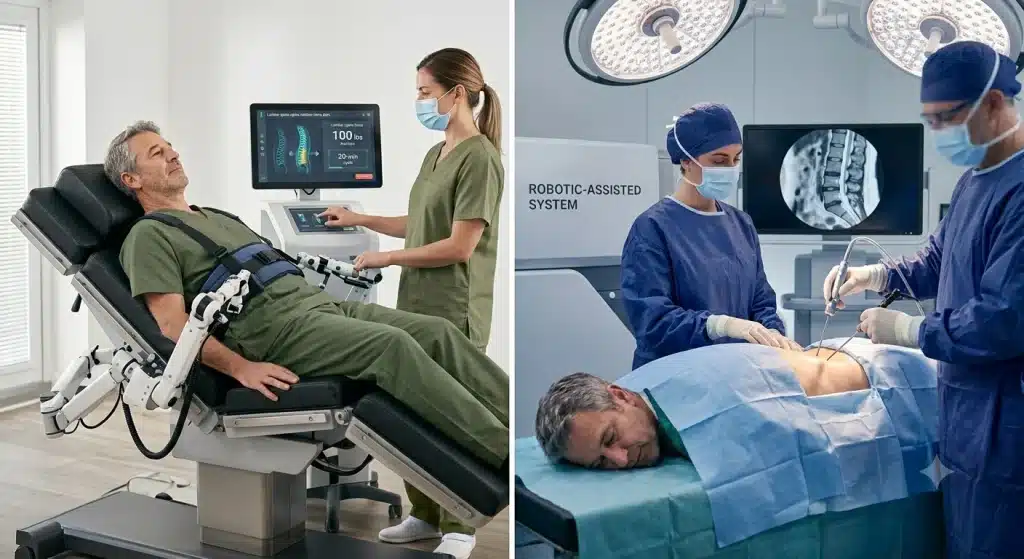
When comparing spinal decompression vs surgery, the main difference is invasiveness.
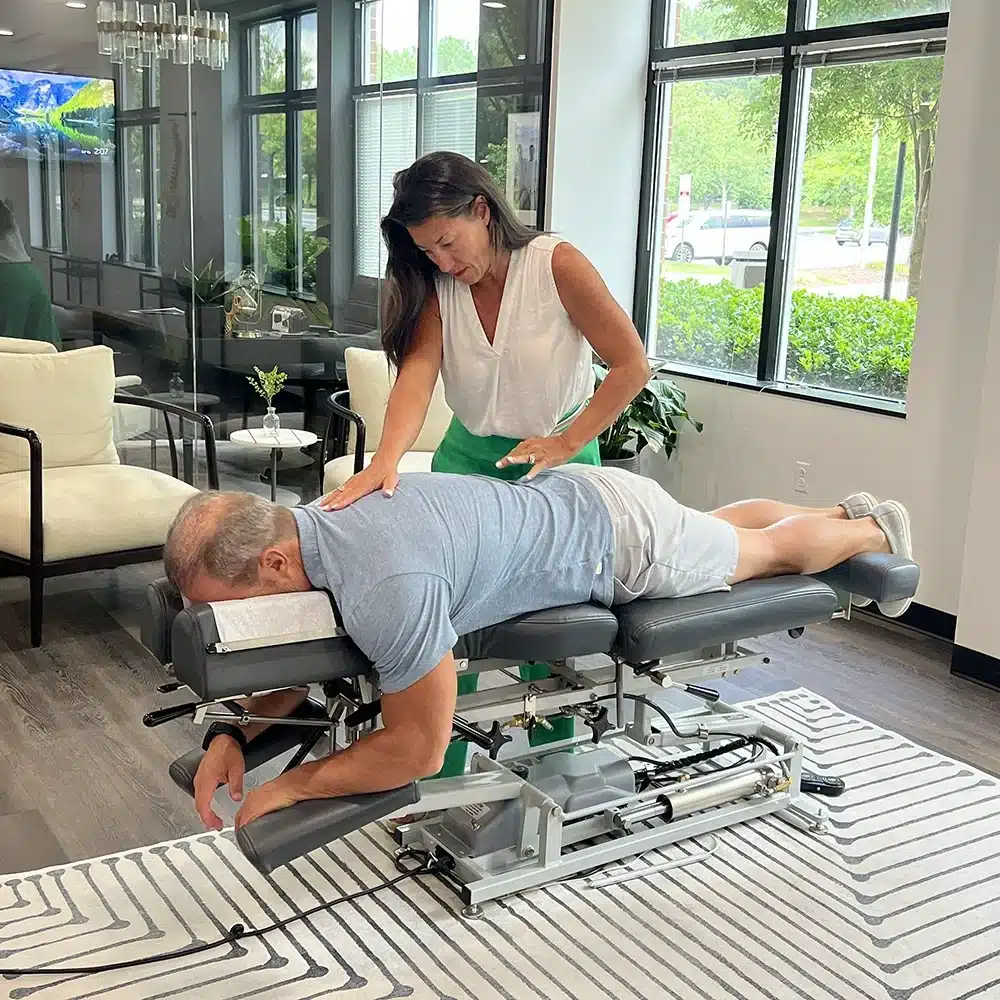
Non-surgical spinal decompression is a conservative care option that uses a specialized traction table to gently stretch the spine. The goal is to reduce pressure on compressed discs and nerves, which may help with chronic back pain, herniated discs, and sciatica relief.
Spine surgery, such as a discectomy or laminectomy, is an invasive medical procedure used for more severe structural problems. Surgery may be necessary when there is progressive nerve damage, severe spinal stenosis, or symptoms that have not improved after conservative treatment.
Understanding the Options: What’s the Difference?
Non-surgical spinal decompression uses a mechanical or computerized table to gently stretch the spine in a controlled way. This process is designed to create negative intradiscal pressure, which may help reduce pressure on spinal discs and irritated nerves.
This treatment does not remove tissue, cut into the body, or permanently change the structure of the spine. Instead, it aims to support natural mobility, reduce compression, and encourage a healthier disc environment over time.
Surgical decompression works differently. Procedures such as discectomy, microdiscectomy, or laminectomy physically remove disc material, bone, or tissue that is pressing on a nerve root or the spinal cord.
Surgery may be open or minimally invasive depending on the diagnosis, location, and severity of the problem. It is generally reserved for more serious conditions or cases where conservative care has not provided enough relief.

When Non-Surgical Spinal Decompression Is Better
Non-surgical spinal decompression may be the better starting point for people with mild-to-moderate disc-related back pain who want to avoid surgery when appropriate.
It may be considered for:
- Bulging discs.
- Herniated discs.
- Degenerative disc disease.
- Mild to moderate sciatica.
- Facet syndrome.
- Chronic back pain related to spinal compression.
- Patients who want a conservative care option first.
The main benefit is that it is non-invasive. There is no anesthesia, no incision, and no hospital stay. Patients usually remain awake and comfortable during treatment, then return to normal daily activity afterward.
Non-surgical decompression may also help support the movement of fluids, oxygen, and nutrients into the disc space by reducing pressure. While it is not guaranteed to “heal” every disc condition, it may be a logical option for patients who do not have emergency symptoms or severe neurological deficits.

When Spine Surgery Is Better
Spine surgery may be the better or necessary option when the condition is severe, progressive, or medically urgent.
Surgery may be recommended for:
- Severe spinal stenosis.
- Advanced spondylolisthesis.
- Cauda equina syndrome.
- Progressive muscle weakness.
- Severe nerve compression.
- Loss of bowel or bladder control.
- Intractable pain that does not respond to conservative care.
- Symptoms that continue after 3 to 6 months of appropriate non-surgical treatment.
The key benefit of surgery is direct mechanical relief. If a disc fragment, bone spur, or narrowed spinal canal is severely compressing a nerve root or the spinal cord, surgery can physically remove the source of compression.
However, surgery also comes with higher risks, including anesthesia risks, infection, bleeding, scar tissue, nerve irritation, and a longer recovery period. This is why many providers recommend conservative care first unless emergency symptoms are present.
Cost Comparison: Out-of-Pocket and Insurance Considerations
| Feature | Non-Surgical Spinal Decompression | Spine Surgery |
| Upfront Cost | Moderate, usually billed per session | High, often involving hospital and surgeon fees |
| Insurance Coverage | Partial or plan-dependent | Usually higher if medically necessary |
| Hidden Costs | Minimal, usually travel and visit time | Time off work, rehab, medications, follow-ups |
| Typical Care Plan | Often 15–24 sessions over several weeks | One procedure plus recovery and rehabilitation |
| Financial Risk | Lower upfront risk | Higher total cost if deductibles, imaging, or rehab apply |
Non-surgical spinal decompression is usually billed per session and often requires a structured treatment plan. Some chiropractic or physical therapy benefits may cover related care, while some advanced decompression services may be out of pocket.
Spine surgery usually has a much higher upfront cost because it may include imaging, surgeon fees, anesthesia, hospital or surgical center fees, medications, and post-operative physical therapy. Insurance may cover surgery when it is medically necessary, but deductibles, copays, and time away from work can still add up.
Recovery Timeline and Expectations
Non-surgical spinal decompression usually has little to no downtime. A session often lasts around 30 to 45 minutes, and most patients can drive themselves home afterward. A full care plan may span 4 to 6 weeks, depending on the condition and response to treatment.
Some patients feel relief early, while others notice gradual improvement over several sessions. Mild soreness can happen as the body adjusts, but major recovery restrictions are uncommon.
Surgical recovery depends on the procedure. A minimally invasive discectomy may allow some patients to return to light activity within a few weeks, though bending, lifting, and twisting are usually restricted during early healing.
More involved procedures, such as open decompression or surgery with fusion, may require 6 to 12 weeks of movement restrictions and several months of rehabilitation. Full tissue healing and strength recovery may take longer depending on the patient’s age, health, job demands, and surgical complexity.
Which Should You Choose?
Choosing between spinal decompression vs surgery depends on your diagnosis, symptom severity, imaging results, and overall health.
Non-surgical spinal decompression may be a logical first step if:
- You have chronic back pain without emergency symptoms.
- You have a bulging or herniated disc.
- You want to avoid surgery if possible.
- You do not have progressive weakness or major neurological loss.
- You prefer conservative care before invasive treatment.
Spine surgery may be necessary if:
- You have loss of bowel or bladder control.
- You have saddle numbness or numbness in the groin area.
- You have progressive leg weakness or foot drop.
- You have severe spinal stenosis or advanced nerve compression.
- Conservative care has failed after several months.
- Your pain is debilitating and tied to a clear structural problem.
If your back pain is persistent but not an emergency, conservative care is often the safer place to begin. However, a comprehensive evaluation with a qualified provider is essential to rule out conditions that require surgical intervention.
Frequently Asked Questions
Is non-surgical spinal decompression painful?
No. Most patients describe non-surgical spinal decompression as a gentle stretching sensation. Many find the treatment relaxing, and some even fall asleep during the session. Mild soreness may occur afterward, especially early in care, but the treatment should not feel intensely painful.
What is the success rate of spinal decompression vs surgery?
There is no single success rate that applies to every patient. Non-surgical spinal decompression may help selected patients with disc-related pain, especially when symptoms are mild to moderate and there are no emergency neurological signs. Surgery can also be successful for properly diagnosed severe nerve compression, but it carries higher risks and a longer recovery. Results depend on the condition, severity, imaging findings, and overall health.
Can I try non-surgical decompression if I’ve already had back surgery?
It depends on the type of surgery. If you have spinal hardware such as screws, rods, cages, or fusion implants, mechanical decompression may not be appropriate. If you had a simple discectomy without hardware and have fully healed, you may still be a candidate in some cases. Always consult your doctor and decompression provider before starting treatment.
How do I know if my back pain requires emergency surgery?
Seek emergency medical care if you experience sudden loss of bowel or bladder control, numbness in the groin or saddle area, severe or rapidly worsening weakness, or sudden weakness in both legs. These may be signs of serious nerve compression, such as cauda equina syndrome, and require immediate medical evaluation.
Final Thoughts
When comparing non-surgical spinal decompression vs surgery, the right choice depends on the seriousness of your condition.
Non-surgical spinal decompression may be a good conservative option for chronic back pain, herniated disc treatment, mild sciatica, and disc-related discomfort when emergency signs are absent. Surgery may be necessary for severe spinal stenosis, progressive neurological loss, cauda equina syndrome, or pain that has not improved after appropriate conservative care.
If you are unsure which path is right, start with a professional evaluation. The safest treatment plan is the one that matches your diagnosis, symptoms, and long-term recovery goals.