




Introduction
Hip pain can make the most basic movements feel difficult. Walking across the room, sitting at your desk, climbing stairs, getting in and out of the car, or sleeping on your side can suddenly become painful. For many people, the frustration is not just the discomfort itself, but the way hip pain limits independence and daily routine.
One common mistake is treating the hip as an isolated joint. In reality, the hip works closely with the lower back, pelvis, knees, ankles, and feet. A problem in one area can change how force moves through the entire lower body. Harvard Health notes that pain on the outside of the hip is often not true bursitis, but may come from tendinitis, tight muscles, IT band irritation, or even spine-related pain.
So, can a hip pain chiropractor offer meaningful relief? For many patients, chiropractic care may help by improving joint motion, addressing pelvic and spinal mechanics, reducing soft tissue tension, and pairing manual therapy with targeted rehabilitation. The key is understanding what is causing the pain first.
Understanding Hip Pain: Location and Root Causes
Pinpointing the Location of Your Pain
Where your hip hurts can give important clues about what may be causing the problem.
Anterior hip or groin pain often points to deeper joint involvement. This may include hip osteoarthritis, labral irritation, femoroacetabular impingement, or other structural joint problems. Because the hip is a ball-and-socket joint where the femur meets the pelvis, cartilage damage or joint degeneration can create pain deep in the groin area.
Lateral hip pain, or pain on the outside of the hip, is commonly blamed on bursitis. However, Harvard Health explains that outer hip pain is often related to gluteal tendinitis, IT band irritation, tight buttock and hip muscles, or spine problems rather than bursitis alone.
Posterior hip or buttock pain may come from the lower back, sacroiliac joint, piriformis muscle, or sciatic nerve irritation. This type of pain may feel like a deep ache, burning, numbness, or pain that travels from the buttock into the thigh.
The Kinetic Chain: How Back and Pelvic Misalignments Cause Hip Pain
The body moves as a chain. When the pelvis tilts unevenly, the lower back becomes restricted, or the feet and knees do not track properly, the hip may compensate. Over time, this can overload certain muscles, irritate tendons, and increase joint stress.
This is also why referred pain matters. A patient may feel pain in the hip, even though the source is the lumbar spine or sacroiliac joint. Spine arthritis, pinched nerves, and lower back dysfunction can all create pain that appears to come from the hip.
What Is Chiropractic Care for Hip Pain?
The Holistic, Non-Invasive Approach
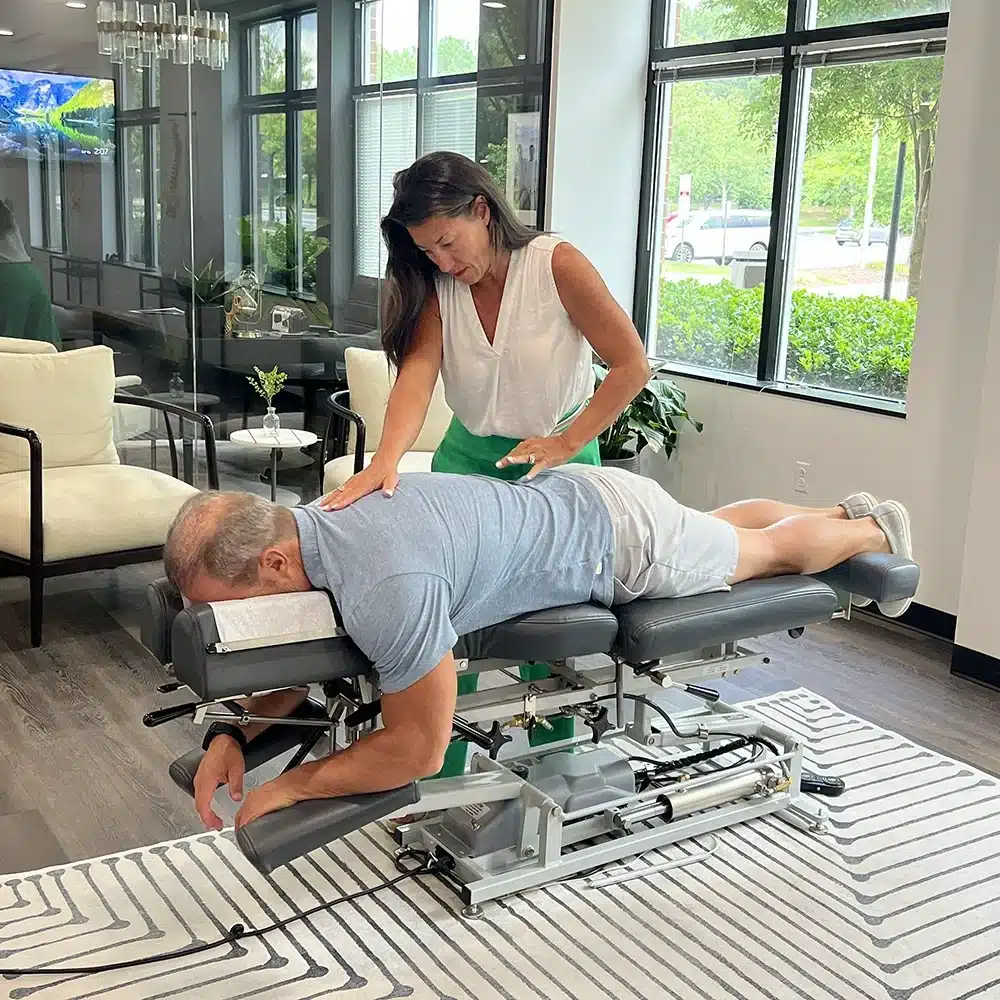
Chiropractic care for hip pain is not just about adjusting the hip. A hip pain chiropractor evaluates the entire musculoskeletal system to understand why the hip is being stressed in the first place. This may include checking spinal mobility, pelvic alignment, hip range of motion, posture, gait, muscle strength, flexibility, and lower-body mechanics.
The goal is to restore more natural movement through the spine, pelvis, and hip so the joint is not forced to compensate for dysfunction elsewhere.
Beyond the “Crack”: Chiropractic Modalities Used for Hips
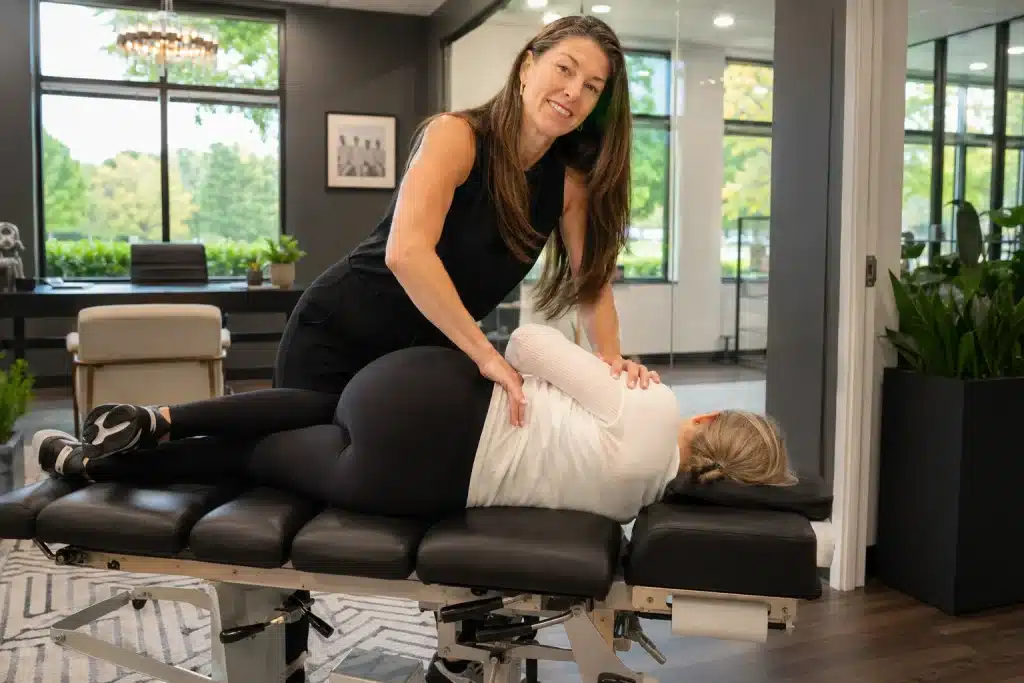
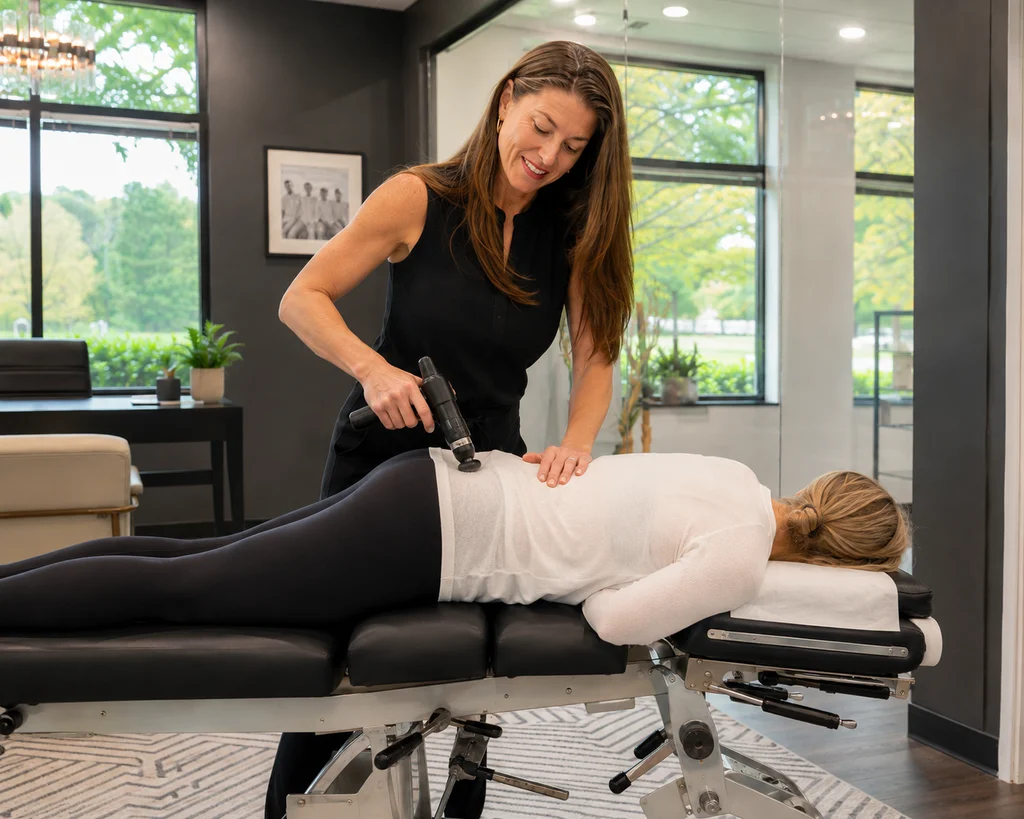
Chiropractic treatment may include spinal adjustments, pelvic adjustments, hip mobilization, pelvic blocking, soft tissue mobilization, myofascial release, stretching guidance, and active rehabilitation.
Some techniques use quick, controlled adjustments. Others use gentler mobilization, table-assisted positioning, or soft tissue work. For hip pain, the best results often come from combining manual therapy with corrective exercise rather than relying on adjustments alone.
Can Chiropractic Care Help Hip Pain? What Research Says
Chiropractic for Hip Osteoarthritis
Research on chiropractic for hip pain is still developing, but several studies support the broader use of manual therapy, manipulative therapy, and exercise for hip osteoarthritis.
A 2010 Journal of Manipulative and Physiological Therapeutics study examined full kinetic chain manipulative therapy with rehabilitation in patients with hip osteoarthritis. The study focused on the idea that the hip should be treated as part of a connected movement system, not just as a single painful joint.
Clinical practice guidelines for hip osteoarthritis also support patient education combined with exercise and/or manual therapy. The 2025 hip osteoarthritis guideline recommends education on activity modification, exercise, weight reduction when appropriate, and joint unloading strategies.
This means chiropractic care may be most useful for hip arthritis when it is part of a complete plan: manual therapy, mobility work, strengthening, patient education, and lifestyle modification.
Addressing Sacroiliac Joint Dysfunction
The sacroiliac joints connect the pelvis to the lower spine. When these joints are irritated or moving poorly, pain may be felt in the low back, buttock, outer hip, or upper thigh.
Research on sacroiliac joint dysfunction suggests that both exercise and manipulation therapy can reduce pain and disability. One clinical study concluded that exercise and manipulation appeared effective for patients with sacroiliac joint dysfunction.
For a chiropractor, this is important because hip pain may not always be coming from the hip joint itself. Correcting pelvic mechanics and improving SI joint function may reduce stress on the surrounding hip muscles and joints.
Sciatica and Nerve Compression Relief
Sciatica can create pain that travels from the lower back into the buttock, hip, thigh, or leg. If the sciatic nerve is irritated by a disc issue, spinal restriction, or inflammation, the patient may describe it as “hip pain” even though the main source is spinal.
Recent guideline reviews for low back pain note that spinal manipulation is commonly recommended for subacute and chronic low back pain, often alongside exercise and staying active.
For patients with hip pain related to nerve irritation, a chiropractor may use lumbar adjustments, decompression-based strategies, posture correction, and nerve-friendly movement to reduce pressure and improve function.
Soft Tissue and Overuse Injury Management
Outer hip pain is often driven by soft tissue problems: tight glutes, irritated tendons, IT band tension, or overuse. Harvard Health specifically highlights tendinitis, overuse injury, tight muscles, and spine problems as common reasons for side-of-hip pain.
Soft tissue therapy may include myofascial release, trigger point work, stretching, and instrument-assisted soft tissue mobilization. A 2025 study found that Graston technique combined with exercise reduced pain and disability in patients with posterior hip pain, though exercise with sham treatment also improved pain and quality of life.
The takeaway is balanced: soft tissue work may help, but it works best when paired with exercise and a clear diagnosis.

What to Expect During a Chiropractic Consultation for Hip Pain
Step 1: Comprehensive Physical and Biomechanical Assessment
A chiropractic consultation for hip pain should start with a detailed history and examination. Your chiropractor may ask when the pain started, where you feel it, what movements make it worse, and whether the pain travels into the back, groin, buttock, or leg.
The exam may include gait analysis, orthopedic testing, hip range-of-motion checks, muscle testing, pelvic alignment assessment, and screening for leg-length differences or lower back involvement.
Step 2: Diagnostic Imaging, If Necessary
Not every patient needs imaging. However, X-rays or referral for additional imaging may be appropriate when symptoms suggest arthritis, fracture, structural degeneration, hip dysplasia, severe labral injury, or another condition that requires medical co-management.
A responsible chiropractor should know when to treat conservatively and when to refer.
Step 3: A Customized Treatment Plan
Treatment is usually phased. The first phase focuses on reducing pain and calming irritation. The second phase works on restoring mobility, improving alignment, and correcting movement patterns. The final phase focuses on strengthening and stability so the pain is less likely to return.
Combining Chiropractic Care with At-Home Exercises
Active Rehab: Rebalancing Your Paired Muscles
Manual therapy can improve motion, but exercise helps keep the improvement. That is why chiropractic care for hip pain often includes active rehab.
Core-stabilizing exercises such as bird-dogs and planks help reduce unwanted pelvic tilting. When the core is stronger, the pelvis is more stable and the hip does not have to compensate as much.
Hip-flexor and glute stretches, such as the seated figure-4 stretch, can reduce tension through the buttock, outer hip, and front of the hip. Harvard Health notes that targeted stretching and strengthening can help restore balance and reduce hip pain related to tight or weak muscles.
When Is Chiropractic Care Not Enough?
Red Flags and Contraindications
Chiropractic care is not the right first step for every case of hip pain. Seek urgent medical care if you have severe hip pain after a fall, cannot walk or bear weight, cannot move your hip or leg, notice sudden swelling, have fever or chills, or the joint looks misshapen. Mayo Clinic and the NHS both list these as signs that require immediate medical attention.
You should also see an orthopedic or medical specialist if you have suspected fracture, severe structural labral tears, progressive neurological symptoms, unexplained weight loss, infection signs, or unremitting night pain.
Conclusion: Taking the Next Step Toward Hip Pain Relief
Clinical research supports a conservative, movement-based approach for many forms of hip pain. Chiropractic care may help when hip discomfort is connected to spinal restriction, pelvic imbalance, sacroiliac joint dysfunction, soft tissue irritation, sciatica, or mild-to-moderate osteoarthritis.
The best results usually come from a complete plan: assessment, manual therapy, targeted exercise, education, and lifestyle changes. If you are tired of relying only on temporary fixes like NSAIDs, consider consulting a local hip pain chiropractor for a personalized biomechanical assessment and a clear path toward better movement.