





Introduction
You wake up ready to start the day, but the moment you try to swing your legs out of bed, your hip feels locked, heavy, sharp, or stubbornly stiff. Instead of moving freely, you have to pause, stretch, limp, or slowly ease your way into standing.
If this sounds familiar, you are not alone. Morning hip pain and stiff hips after sleeping are common complaints, especially for adults dealing with arthritis, bursitis, tendinitis, lower back issues, or poor sleep positioning. The frustrating part is that your body may feel like it aged decades overnight, even if you felt relatively normal the day before.
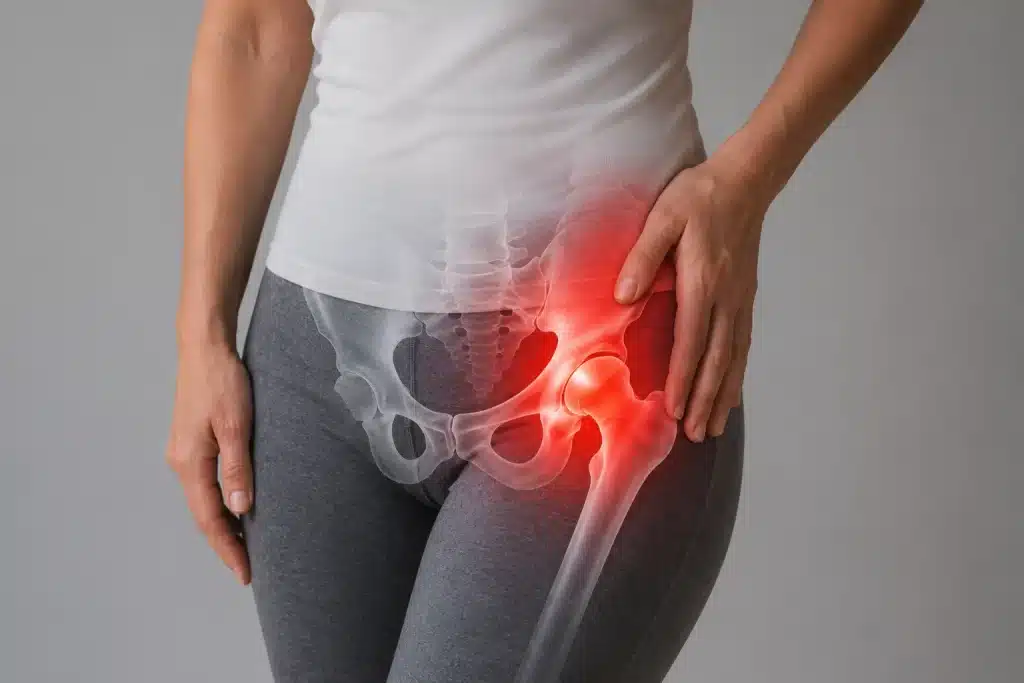
The reason this happens is usually a mix of biology, joint mechanics, inflammation, and sleep environment. Your hip is not just one isolated joint. It works with your pelvis, spine, glutes, hip flexors, knees, and feet. When those structures stay still for hours, stiffness can build up quickly.
This guide explains why hip pain often feels worse in the morning, how different types of arthritis behave after sleep, and what you can do before and after getting out of bed to start your day with less pain and better mobility.
The Biology of Sleep: Why Joints Lock Up Overnight
The “Gel Phenomenon” and Synovial Fluid Friction
Healthy joints rely on synovial fluid, a natural lubricant that helps reduce friction and allows the bones inside the joint to glide smoothly. Movement helps circulate this fluid through the joint. That is why many clinicians say, “motion is lotion.”
When you sleep for seven to eight hours, your joints are mostly still. During long periods of inactivity, synovial fluid can become less evenly distributed, and the joint may feel thick, sticky, or resistant when you first move. Cleveland Clinic describes this as the “morning gel” effect, where joints feel stiff after inactivity and loosen up after movement.
For the hip, this can feel like deep stiffness in the groin, tightness on the outside of the hip, or a dull ache when standing. The first few steps may be uncomfortable because the joint has not yet warmed up. Once you begin moving gently, circulation improves, synovial fluid spreads, and the joint often begins to feel less restricted.
The Circadian Rhythm of Inflammation
Your body’s internal clock also affects pain. Circadian rhythms regulate many body processes across a 24-hour cycle, including immune activity and inflammation. In inflammatory arthritis, research shows that pro-inflammatory cytokines can rise overnight and peak in the early morning, which may help explain why stiffness is worse after waking.
The Arthritis Foundation notes that people with rheumatoid arthritis may have significantly higher inflammatory activity around 3 a.m., and that cortisol timing may be out of sync with the body’s inflammatory peaks.
This matters because inflammation can build while you are resting. By morning, the joint tissues may feel swollen, irritated, and harder to move. For some people, this fades quickly. For others, especially those with inflammatory arthritis, morning stiffness may last much longer.
Primary Causes of Morning Hip Pain
Osteoarthritis vs. Inflammatory Arthritis
Osteoarthritis: The Wear-and-Tear Effect
Osteoarthritis is a degenerative joint condition where the tissues inside the joint break down over time. In the hip, this can affect cartilage, bone, and surrounding structures. NIAMS explains that osteoarthritis commonly causes pain and short periods of stiffness after rest or inactivity, and it often affects the hips.
Morning hip pain from osteoarthritis usually improves within 30 minutes once you start moving. The joint may feel rusty at first, then gradually loosen as synovial fluid circulates and muscles activate. NIAMS also notes that osteoarthritis morning stiffness typically lasts less than 30 minutes.
Inflammatory Arthritis: The Autoimmune Attack
Inflammatory arthritis includes conditions such as rheumatoid arthritis, psoriatic arthritis, and ankylosing spondylitis. Instead of simple wear-and-tear, these conditions involve immune system activity that attacks joint tissues or causes chronic inflammation.
The key difference is duration. Johns Hopkins Arthritis Center notes that morning stiffness lasting more than one hour is especially characteristic of rheumatoid arthritis and other inflammatory arthritis conditions.
If your stiff hips after sleeping take 60 minutes or longer to loosen, or if stiffness comes with swelling, warmth, fatigue, or multiple painful joints, it may be time to ask a healthcare provider about inflammatory causes.
Hip Bursitis
Bursae are small, fluid-filled sacs that cushion areas where tendons, muscles, and bones move near each other. Trochanteric bursitis happens when the bursa near the outside of the hip becomes inflamed, often causing pain on the outer hip. Cleveland Clinic explains that trochanteric bursitis affects the bursa that cushions the greater trochanter of the femur.
Morning pain may feel worse if you sleep on the affected side. Side-sleeping can compress the irritated bursa between the hip bone and mattress, increasing pressure overnight. Arthritis Foundation also notes that side sleepers are especially prone to nighttime hip pain because of pressure on the hip joint and poor alignment.
Tendinitis and Muscle Tightness
Not all morning hip pain comes from the joint itself. Tight hip flexors, glutes, hamstrings, and the iliotibial band can also create stiffness after sleep.
When muscles and tendons stay in one position for hours, they can temporarily lose elasticity. The hip flexors may feel tight in the front of the hip. The glutes may feel heavy or sore. The IT band may contribute to pulling or tension along the outside of the hip.
This is why some people feel better after a warm shower, a short walk, or gentle stretching. The pain is not always “damage.” Sometimes it is a signal that the tissues need gradual movement before loading.
Ergonomics and Sleep Environment: The Hidden Culprits
Sleep Posture Pitfalls
Your sleep position can either reduce hip stress or make it worse.
Side sleepers often experience pelvic misalignment when the top leg drops forward. This twists the lower back and places uneven strain on the upper hip. A pillow between the knees can help keep the pelvis and spine more neutral. Recent guidance from a physical therapist explains that side sleepers may benefit from a knee pillow because it helps prevent the top leg from rotating the body out of alignment.
Back sleepers may feel tightness in the front of the hips if the legs stay flat all night and the hip flexors are already shortened from sitting during the day. A pillow under the knees can slightly flex the hips and reduce tension through the lower back.
Stomach sleeping is often the hardest position on the hips and lower back. It can flatten or twist the spine, rotate the pelvis, and place pressure through the front of the hips.
Mattress and Pillow Support
A mattress that is too soft can allow the pelvis to sink, creating a “hammock effect.” This places stress on the hips, lower back, and SI joints. A mattress that is too firm can create direct pressure on the hip bone, especially for side sleepers.
The goal is not simply “soft” or “firm.” The goal is support with pressure relief. If you wake up sore only after sleeping, your mattress, pillow setup, or sleeping posture may be contributing more than you think.

How to Defeat Stiff Hips Before Getting Out of Bed
The “In-Bed” Gentle Mobility Routine
Before standing, give your hips a chance to wake up. These movements should feel easy, slow, and controlled.
Start with ankle pumps and circles. Point and flex your feet 15 to 20 times, then make slow circles in both directions. This helps initiate circulation through the lower body.
Next, try gentle knee-to-chest hugs. Bring one knee toward your chest, hold for a few seconds, then switch sides. Do not force the range. The goal is to gradually open the hip joint.
Then perform glute bridges. Bend your knees, keep your feet on the bed, gently tighten your glutes, and lift your hips a few inches. Hold briefly, then lower. This activates the posterior chain before standing.
Finish with supine windshield wipers. Lie on your back with knees bent and slowly let both knees move side to side within a comfortable range. This gently introduces internal and external hip rotation.
Strategic Timing of Medications
Some people with arthritis or inflammatory conditions may benefit from adjusting medication timing, but this should only be done with medical guidance.
Ask your physician whether the timing of over-the-counter or prescribed anti-inflammatory medication is appropriate for your situation. Do not take NSAIDs if you have been told to avoid them due to kidney disease, ulcers, blood thinners, certain heart conditions, or other medical risks.
Some patients with prescribed anti-inflammatory medication may be advised to take it before their usual wake time, but this should be personalized by a doctor.
Post-Wakeup Remedies to Melt Away Hip Stiffness
The Power of Thermal Therapy
Heat is often the preferred choice for morning stiffness. Warmth helps relax tight muscles, increase blood flow, and make movement feel easier. Try a 10 to 15-minute warm shower shortly after waking.
You can also use a heating pad on the hip or lower back before getting out of bed, as long as it is used safely and not while sleeping unattended. Some people use an electric blanket or programmable heating pad to warm the body before waking, but always follow safety instructions to avoid burns.
Ice may be better later in the day if the hip feels inflamed, swollen, or irritated after activity. For morning stiffness, heat usually makes more sense.
Active Unlocking: Low-Impact Morning Movement
After getting up, avoid rushing into heavy activity. Your tissues need time to warm up.
A short walk around the house, gentle yoga, easy stretching, or tai chi-style movement can help reduce stiffness without overwhelming the joint. The rule is simple: pace, do not race.
Forcing deep stretches or intense exercise too early can irritate stiff muscles and tendons. Start small, then gradually increase movement as the hip loosens.
Daytime and Nighttime Habits for Better Mornings
Optimizing Your Sleep Setup
For side sleepers, place a pillow between the knees to keep the pelvis level. For back sleepers, place a pillow under the knees to reduce tension through the lower back and hips.
If your mattress is older, sagging, or creating pressure points, consider whether a supportive topper or mattress replacement is needed. Nighttime alignment often determines how your hips feel in the morning.
Combating Sedentary Behavior During the Day
Morning hip pain is heavily influenced by what you do during the day. If you sit for long hours, your hip flexors shorten, glutes become underactive, and the pelvis may become more restricted.
Use “movement snacks” every 30 to 45 minutes. Stand up, walk briefly, do a few gentle hip circles, or perform light glute squeezes. These small breaks prevent stiffness from building all day and carrying into the night.
Dietary and Lifestyle Adjustments
Inflammation is not only mechanical. Diet, hydration, sleep quality, stress, and alcohol intake can all affect how your body feels in the morning.
A diet rich in omega-3 fatty acids, leafy greens, berries, olive oil, and lean protein may support a healthier inflammatory response. Excessive evening alcohol can worsen sleep quality, hydration, and inflammation, leaving joints and muscles feeling more irritated the next morning.
When to See a Doctor for Morning Hip Pain
Morning hip pain should be evaluated if stiffness consistently lasts longer than one hour, especially if it comes with swelling, warmth, redness, fatigue, or pain in multiple joints.
Seek urgent medical care if you have severe hip pain after a fall or injury, cannot walk or put weight on the leg, or have tingling or loss of feeling after an injury. NHS guidance lists these as reasons to seek emergency care.
You should also speak with a healthcare provider if pain radiates down the leg with numbness or tingling, if night pain is unrelenting, or if symptoms are getting worse despite rest and home care.
Conclusion
Morning hip pain is usually not caused by one single factor. It can come from thickened joint fluid after inactivity, overnight inflammation, arthritis, bursitis, tendon tightness, poor sleep posture, or an unsupportive mattress.
The good news is that it does not have to control your entire day. By adjusting your sleep position, using heat wisely, improving your mattress support, adding gentle in-bed mobility, and moving more throughout the day, you can help your hips feel less stiff when you wake up.
Start tomorrow morning before your feet even touch the floor. Move slowly, warm the joint, activate the muscles, and give your body a smoother transition into the day.